


Planning, structuring and securing industrial network and IT infrastructures in production-related and critical environments.
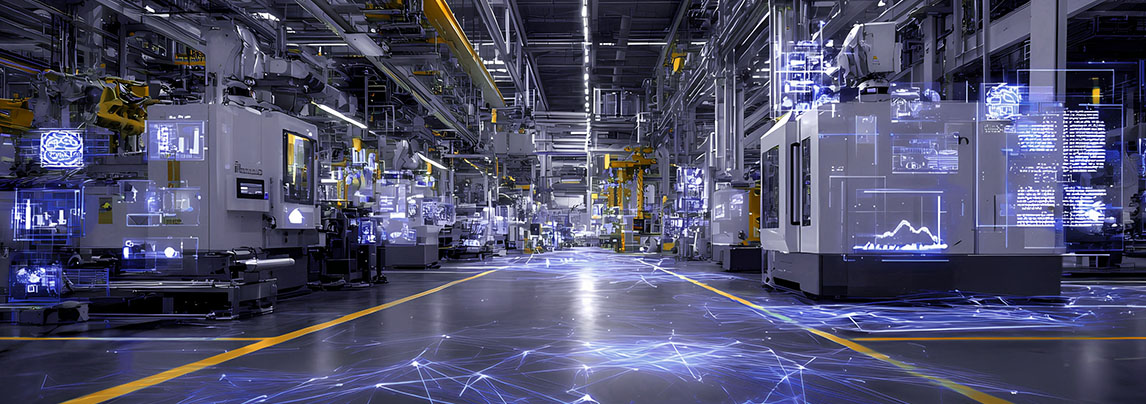
A key component of modern production and control systems.
The networking of industrial plants, control systems and higher-level systems enables the seamless operation of complex processes.
As connectivity increases, so do the demands for stability, segmentation and security – particularly where IT and OT environments interact with high requirements for availability, protection against unauthorised access and resilient operational processes.
Network infrastructures that have evolved over time or are inadequately structured often lead to increased risks, reduced transparency and limited controllability. Increasingly dangerous situations further exacerbate these challenges.
The goal is to develop clearly structured, resilient and sustainable network architectures that support stable and robust operational processes.

Areas of expertise in industrial network engineering
Our services include the analysis, design and implementation of industrial network architectures, taking into account technical and regulatory requirements.
The focus is particularly on the following service components:
Analysis of existing OT and network structures
Segmentation and development of zoning concepts
Design of industrial network architectures
Systematic identification and evaluation of existing systems, communication relationships and technical dependencies as a basis for well-informed architectural decisions.
Organising networks into clearly defined areas to reduce risks and improve transparency and manageability.
Development of resilient architectures that take into account availability, scalability and security requirements.
Integration of IT and OT structures
Securing communication channels
Support for implementation and migration
Coordination and secure integration of industrial systems into higher-level IT environments, taking existing operational processes into account.
Definition and implementation of controlled data flows between systems and network segments to ensure integrity and traceability.
Structured support for the implementation of new architectures while minimising operational risks and unplanned interruptions.
Analysis of existing OT and network structures
Systematic identification and evaluation of existing systems, communication relationships and technical dependencies as a basis for well-informed architectural decisions.
Segmentation and development of zoning concepts
Organising networks into clearly defined areas to reduce risks and improve transparency and manageability.
Design of industrial network architectures
Development of resilient architectures that take into account availability, scalability and security requirements.
Integration of IT and OT structures
Coordination and secure integration of industrial systems into higher-level IT environments, taking existing operational processes into account.
Securing communication channels
Definition and implementation of controlled data flows between systems and network segments to ensure integrity and traceability.
Support for implementation and migration
Structured support for the implementation of new architectures while minimising operational risks and unplanned interruptions.
Industrial networks are subject to specific conditions that differ significantly from those of traditional IT environments.
The following are of particular relevance in this context:

High requirements for availability and reliability
Production and control processes require uninterrupted operation without unplanned downtime.

Diverse system landscapes that have evolved over time
Different technologies and generations of systems make standardisation and validation difficult.

Increasing connectivity and vulnerabilities
Integration with IT systems and external connections increases exposure to threats.
Normative and regulatory requirements (e.g. IEC 62443)
Regulations require structured security concepts and transparent implementation.

Limited options for intervention during operation
Changes must be carefully planned to avoid production risks.

Dependencies between technical and organisational processes
Measures have a direct impact on operational processes and responsibilities.
Our work centres on industrial and production-related environments with high standards of stability and operational safety.
This includes, in particular, companies operating internationally as well as operators of complex or critical infrastructure, with a significant portion of the work taking place in the context of Critical Infrastructure Operators (KRITIS) and the corresponding regulatory framework.
Long-term stability forms the foundation of our partnership, complemented by our consistent adherence to company-specific security and confidentiality requirements.

Direct communication for initial coordination
We’d be happy to review your enquiry and discuss how to proceed.

Direct communication for initial coordination
We’d be happy to review your enquiry and discuss how to proceed.


